

One of the most common criticisms leveled against dispensationalism goes something like this:
“The Geneva Bible didn’t teach it. The Reformers didn’t teach it. Therefore, dispensationalism must be false.”
At first glance, the argument sounds persuasive. After all, the Reformers were brilliant students of Scripture who helped recover many foundational biblical truths. Their contributions to Christian history cannot be overstated.
But notice the assumption hidden beneath the argument.
The claim is not actually an argument from Scripture, instead it is an argument from stemming from historical authority.
If a doctrine is false simply because the Reformers did not teach it, then consistency would require us to reject many ideas they held differently than modern Christians. Most Reformers embraced some form of covenant theology. Many were amillennial. Most held views concerning church-state relationships that few Protestants or Evengelicals would accept today.
The Reformers were remarkable men, but they were not prophets. They interpreted Scripture through the historical lens available to them, just as every generation does.
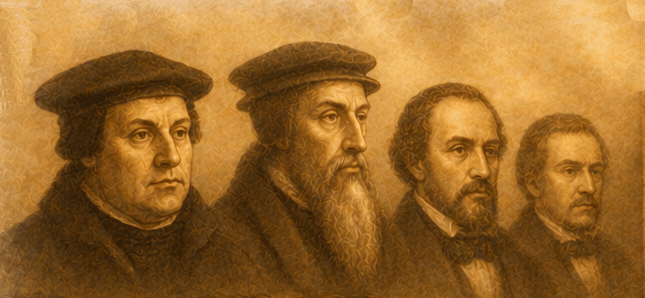
Consider the world in which they lived.
They existed centuries before the modern return of the Jewish people to their ancestral homeland. They never witnessed the rebirth of Israel in 1948. They knew nothing of the geopolitical realities of the modern Middle East.
As a result, prophetic passages concerning Israel were often understood through a church-centered framework. Dispensationalists argue that later historical developments forced many believers to revisit those texts and ask whether they should be read more literally.
This is not a new phenomenon.
Throughout church history, Christians have repeatedly reexamined biblical passages as events unfolded. The Protestant Reformation itself was built upon the conviction that Scripture—not tradition—must remain the final authority.
The real question, therefore, is not what the Reformers believed.
The question is: What does the text actually say?
The authority of Scripture did not end with the Reformers, nor is biblical interpretation frozen in the sixteenth century.
God’s Word continues to speak across generations, and each generation is responsible for testing its conclusions against the text itself.
The Reformers deserve our respect in many ways but they do not deserve infallibility.
A doctrine should stand or fall based on Scripture, not on whether it was recognized by a particular group of theologians living beyond the apostolic age at a particular moment in history.
The irony is that the Reformers themselves challenged centuries of accepted interpretation when they believed Scripture demanded it. If they taught us anything, it is that every tradition—including their own—must remain subject to the authority of God’s Word.
Leave a Reply